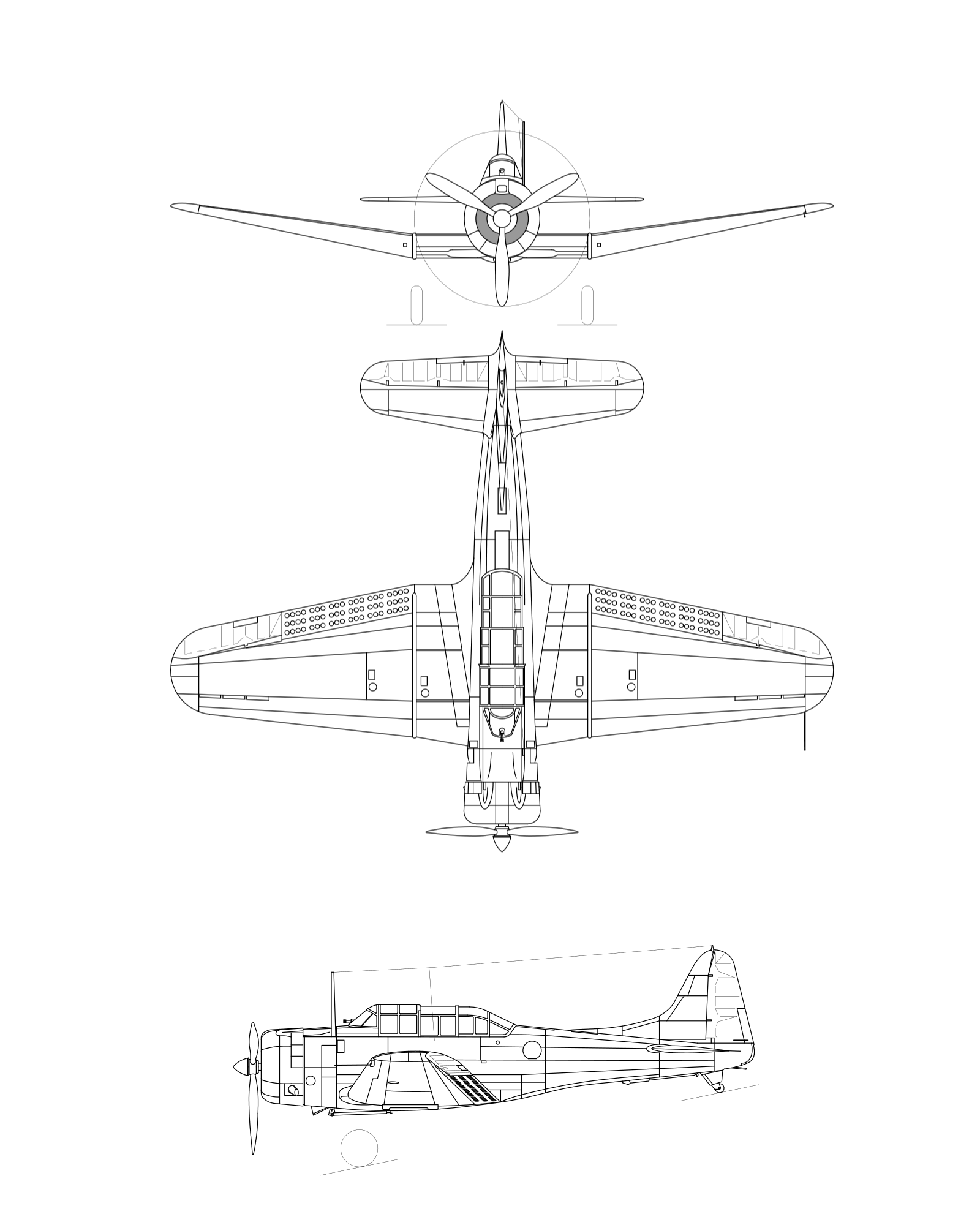
Specifications (SB2C-4 Helldiver)
Data from United States Navy Aircraft Since 1911
General characteristics
- Crew: 2
- Length: 36 ft 8 in (11.18 m)
- Wingspan: 49 ft 9 in (15.16 m)
- Height: 13 ft 2 in (4.01 m)
- Wing area: 422 sq ft (39.2 m2)
- Empty weight: 10,547 lb (4,784 kg)
- Gross weight: 16,616 lb (7,537 kg)
- Powerplant: 1 × Wright R-2600-20 Twin Cyclone 14-cylinder air-cooled radial piston engine, 1,900 hp (1,400 kW), Also used in A-20 Havoc, B-25 Mitchell, TBF Avenger, PBM Mariner.
- Propellers: 4-bladed constant-speed propeller
Performance
- Maximum speed: 295 mph (475 km/h, 256 kn) at 16,700 ft (5,100 m)
- Cruise speed: 158 mph (254 km/h, 137 kn)
- Combat range: 1,165 mi (1,875 km, 1,012 nmi) with 1,000 lb (450 kg) bomb load
- Service ceiling: 29,100 ft (8,900 m)
- Rate of climb: 1,800 ft/min (9.1 m/s)
Armament
- Guns:
- 2 × 20 mm (0.787 in) AN/M2 cannon in the wings [1 × 0.50 in (12.7 mm) wing guns on -1 model]
- 2 × 0.30 in (7.6 mm) M1919 Browning machine guns in the rear cockpit [1 × 0.30 in (7.62 mm)]
- 4 X 0.50 in (13 mm) M2 Browning machine guns, two each in gunpods mounted on underwing hardpoints (optional)
- Rockets: 8 × 5 in (127 mm) high velocity aircraft rockets
- Bombs:
- In internal bay: 2,000 lb (910 kg) of bombs or 1 × Mark 13-2 torpedo
- On underwing hardpoints: 500 lb (230 kg) of bombs each
First operational sortie was on November 11, 1943. VB-17, flying SB2C-1c models from USS Bunker Hill, attacked the Japanese-held port of Rabaul. The SB2C remained in active postwar service in active duty US Navy squadrons until 1947 and in Naval Reserve aviation units until 1950. Surplus aircraft were sold to the naval air forces of France, Italy, Greece, Portugal, and Thailand. Greek SB2Cs served in combat in the Greek Civil War with additional machine guns mounted in wing pods. French SB2Cs flew in the First Indochina War from 1951 to 1954.
Production
- SB2C-1(c) 978 built in US; 1,250 built in Canada
- SB2C-3 1,112 built in US; 563 built in Canada
- SB2C-4 2,045 built in US; 370 built in Canada
- SB2C-5 970 built in US; 85 built in Canada
- Total: 7,373 built, with 2,952 being cancelled.
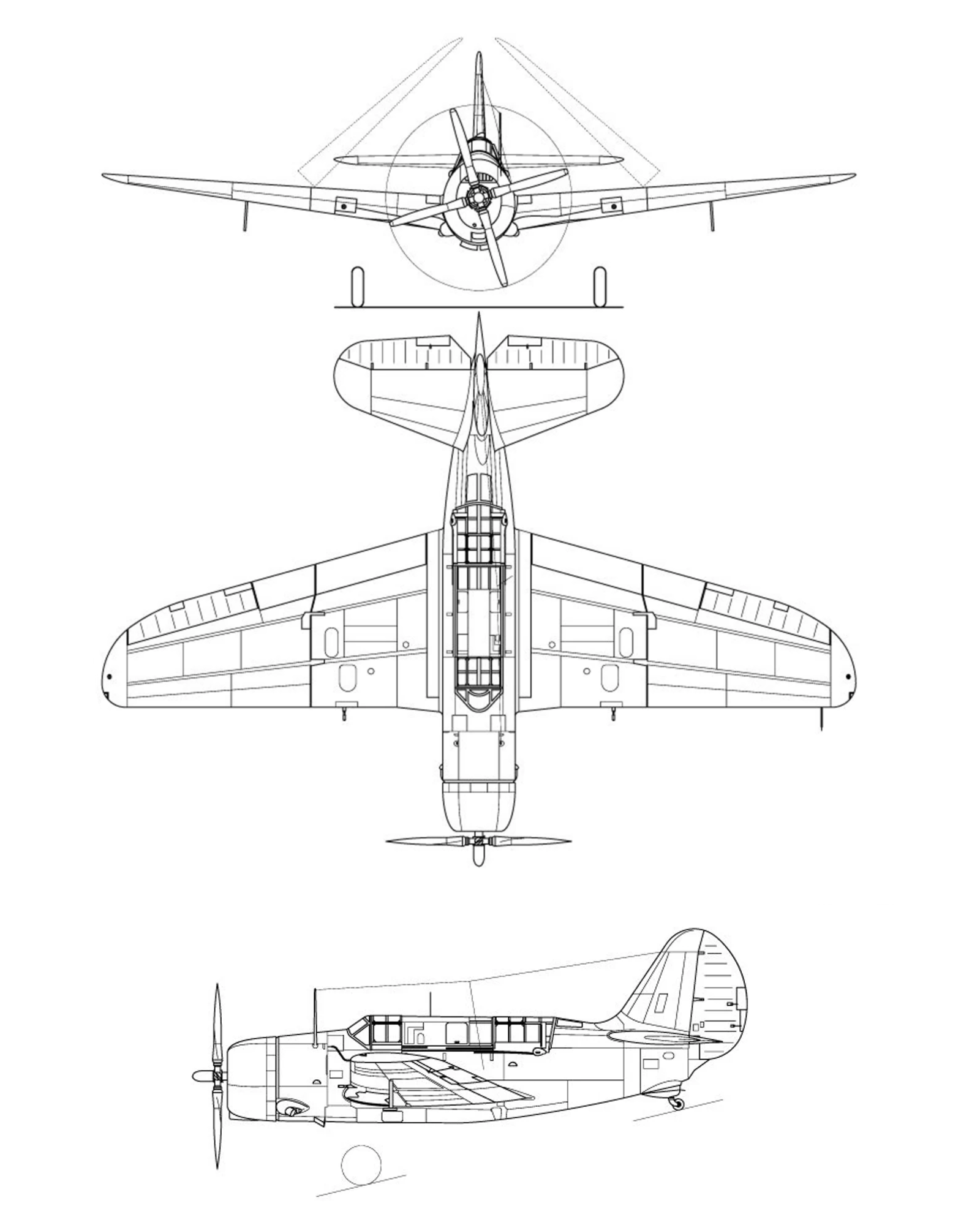
Specifications (SBD-5)
Data from McDonnell Douglas aircraft since 1920: Volume I
General characteristics
- Crew: 2
- Length: 33 ft 1.25 in (10.0902 m)
- Wingspan: 41 ft 6.375 in (12.65873 m)
- Height: 13 ft 7 in (4.14 m)
- Wing area: 325 sq ft (30.2 m2)
- Empty weight: 6,404 lb (2,905 kg)
- Gross weight: 9,359 lb (4,245 kg)
- Max takeoff weight: 10,700 lb (4,853 kg)
- Fuel capacity: 260 US gal (220 imp gal; 980 l) in non-metallic self-sealing fuel tanks
- Powerplant: 1 × Wright R-1820-60 Cyclone 9-cylinder air-cooled radial piston engine, 1,200 hp (890 kW). Also used in DC-3, FM-1 Wildcat, B-17 Flying Fortress, Sikorsky H-34.
- Propellers: 3-bladed Hamilton-Standard constant-speed propeller
Performance
- Maximum speed: 255 mph (410 km/h, 222 kn) at 14,000 ft (4,300 m)
- Cruise speed: 185 mph (298 km/h, 161 kn)
- Range: 1,115 mi (1,794 km, 969 nmi)
- Ferry range: 1,565 mi (2,519 km, 1,360 nmi)
- Service ceiling: 25,530 ft (7,780 m)
- Rate of climb: 1,700 ft/min (8.6 m/s)
- Wing loading: 28.8 lb/sq ft (141 kg/m2)
- Power/mass: 0.128 hp/lb (0.210 kW/kg)
Armament
- Guns:
- 2 × 0.50 in (12.7 mm) forward-firing synchronized Browning M2 machine guns in engine cowling
- 2 × 0.30 in (7.62 mm) flexible-mounted Browning M1919 machine guns in rear
- Bombs: 2,250 lb (1,020 kg) of bombs
The SBD’s most important contribution to the American war effort came during the Battle of Midway in early June 1942. Four squadrons of Navy SBD dive bombers attacked and sank or fatally damaged all four Japanese fleet carriers present, disabling three of them in the span of just six minutes (Akagi, Kaga, Sōryū) and, later in the day, Hiryū. They also caught two straggling heavy cruisers of the Midway bombardment group of four, heavily damaging them, with Mikuma eventually sinking.
The SBD’s strengths and weaknesses became evident. By 1944, the U.S. Navy began replacing the SBD with the more powerful SB2C Helldiver. The Battle of the Philippine Sea was the last major engagement of the carrier-borne SBDs. Although the Curtiss Helldiver had a more powerful engine, a higher maximum speed, and could carry nearly a thousand pounds more in bomb load, many of the dive bomber pilots preferred the SBD, which was lighter and had better low-speed handling characteristics, critical for carrier landings. A total of 5,936 SBDs were produced during the War.